
Loading...
Serving Saginaw, MI and surrounding areas. (989) 900-0594
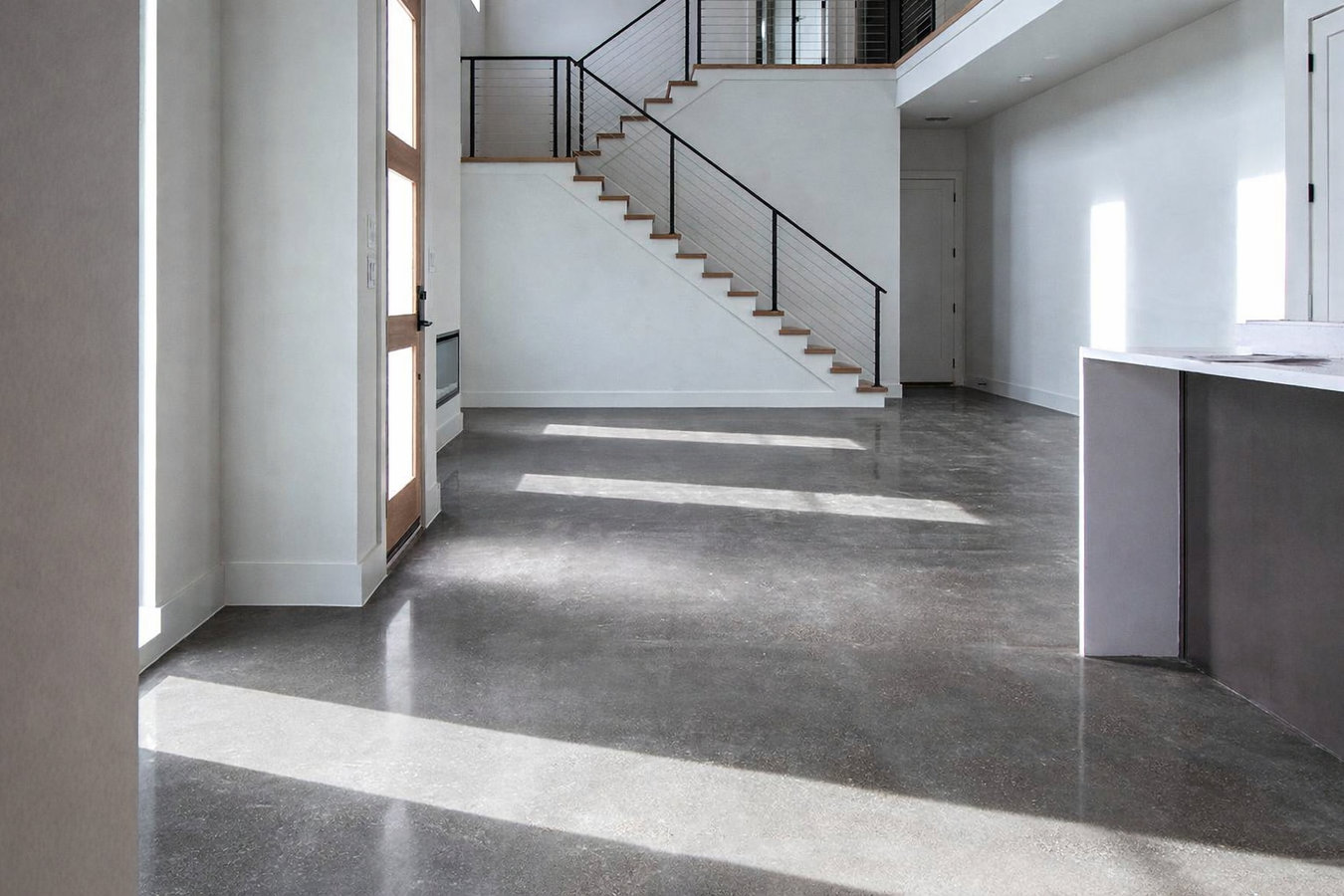
A cracked, uneven, or failing basement or garage floor is more than an eyesore. We install concrete floors with the base prep and thickness Saginaw's clay soils and freeze-thaw winters demand.
Concrete floor installation in Saginaw means preparing the base, pouring a properly reinforced slab, and finishing it to the right texture for the space - most residential jobs take one to two days to pour, with about 28 days of curing before the floor reaches full strength. It is not just "pouring concrete." The preparation underneath - soil compaction, gravel base depth, and moisture management - is what determines how the floor holds up over time.
A large share of Saginaw's homes were built before 1960, and many of those original basement and garage floors were poured thin and without reinforcement. If your floor is cracked, uneven, or actively deteriorating, a replacement is usually more cost-effective than repeated patching that never fully holds. If you are thinking about a full garage update, our garage floor concrete service covers garage-specific thickness and finish options in more detail.
Small hairline cracks are normal in older concrete, but if you can fit a coin edge into a crack, or if cracks run diagonally across a large section, the slab has shifted beyond what patching can fix. In Saginaw's older homes this is common in basements poured thin decades ago and cycled through hundreds of freezes since.
If water collects in low spots on your basement or garage floor after rain, the slab has settled unevenly. This is especially common in Saginaw homes built on clay soil, where the ground beneath shifts with moisture and temperature changes. Standing water accelerates deterioration and can lead to mold.
When the top layer chips off in flakes or crumbles to a sandy powder, the surface has broken down and cannot be repaired with a coating or patch. This kind of failure is often caused by years of road salt tracked in from Saginaw's salted winter streets, combined with moisture cycling through the slab.
If you are finishing a basement or converting a garage and the existing floor is uneven, everything built on top of it will have problems. Flooring will buckle, doors will stick, and walls will not sit plumb. Replacing the concrete floor before starting the finishing work saves you from tearing everything apart later.
We install concrete floors for basements, garages, utility rooms, workshops, and outbuildings across Saginaw and the surrounding service area. The process is the same on every job: assess what is there, prepare the base correctly, pour at the right thickness, and finish to match how the space will actually be used. For spaces that connect to a pool or outdoor living area, our concrete pool decks service handles outdoor pours with the same attention to base prep and drainage.
Finish options matter more than most homeowners realize. A broom finish gives texture and grip - good for garages and utility spaces. A smooth trowel finish looks polished and is easier to clean - better for finished basements or workshops. Stained or decorative finishes can mimic tile or stone for spaces where appearance matters. We walk you through the options before the pour so you are not making that decision under time pressure on installation day.
Best for Saginaw homes built before 1980 with thin, cracked, or uneven original slabs that have reached the end of their useful life.
Suited for homes with original garage floors that were never reinforced or poured to the thickness needed for today's heavier vehicles.
Ideal for workshops, sheds, and detached structures that need a stable, cleanable concrete surface without the added cost of a decorative finish.
The right choice for basements and garages where the homeowner wants a broom, trowel, or stained finish that looks good and holds up to daily use.
Saginaw sits on clay-heavy soils that expand when wet and shrink when dry. That repeated movement shifts concrete slabs over time if the base underneath is not prepared correctly. A contractor who skips soil compaction or the gravel base layer is cutting a step that you will not notice at first - but you will notice within a few winters when the floor starts to crack or heave. This is especially common in the area's older neighborhoods, where original slabs were often poured directly onto uncompacted soil with little or no gravel. We serve homeowners in Flint and Burton as well, where similar soil and climate conditions apply.
Saginaw's freeze-thaw winters add another layer of stress. From November through March, temperatures regularly drop below freezing and then climb back above it - sometimes multiple times in a week. Each freeze-thaw cycle pushes on whatever is beneath your floor. That is why the timing of your pour matters too: concrete needs temperatures above 50 degrees to cure properly, and outdoor or unheated spaces like garages should be poured in the late spring through early fall window whenever possible. Spring booking fills fast - reaching out in late winter helps you get on the schedule before the rush. For more on how concrete performs in cold climates, the Portland Cement Association has reliable guidance for homeowners.
We ask about the area, the intended use, and whether there is an existing floor that needs to come out. Most jobs require a site visit before we give you a firm price - the condition of what is there affects the cost. You receive a written estimate that breaks down labor, materials, and any demolition separately.
We assess the existing subfloor and soil condition before work begins. If your project requires a permit from the City of Saginaw Building Safety Department, we pull it and coordinate the inspection - you should not have to navigate city hall on your own.
If an old floor is coming out, we break it up and haul it away. We then compact the soil and add a gravel base layer. In Saginaw's clay-heavy soil, this preparation step is the most important part of the job - a floor is only as good as what is underneath it.
On pour day the crew places reinforcement, pours the slab, and finishes the surface. Once the pour is complete we walk you through the curing timeline - typically 24 to 48 hours before light foot traffic, and up to 28 days before the slab reaches full strength.
Free written estimate. No surprise costs. We reply within 1 business day.
(989) 900-0594Saginaw's clay-heavy soil expands when wet and shrinks when dry - a cycle that shifts a concrete slab over time if the base is not prepared correctly. We compact the soil and add a crushed gravel layer on every job so your floor has a stable, well-draining foundation underneath it.
Older Saginaw homes often hide problems under the existing slab - soft spots, poor drainage, or a base that was never done right the first time. We assess what is there before giving you a price, and if we find something unexpected, we explain your options before spending another dollar.
Saginaw requires permits for most significant concrete floor work, and permitted work is inspected by the city. We manage the permit process so the job is documented and your home stays sale-ready.
Portland Cement Association - concrete floor resourcesA standard residential floor is four inches thick, but garage floors that hold vehicles are often five to six inches. We pour your floor at the right thickness for how you actually use the space - not the minimum that cuts costs on our end.
American Concrete Institute - floor construction standardsA floor is one of those things you stop thinking about once it is done right. Our goal on every job in Saginaw is to pour a floor you can use for decades without it becoming a problem again - and to make the process straightforward from the first call to the final walkthrough.
Slip-resistant pool deck surfaces poured and finished to handle Saginaw's seasonal temperature swings.
Learn MoreGarage-specific pours built to the thickness needed for daily vehicle traffic and Michigan road salt exposure.
Learn MoreSpring installation slots go fast - contact us now and lock in your date before the season fills up.